Visualizzazione post con etichetta Sardi nel mondo. Mostra tutti i post

venerdì 30 giugno 2017

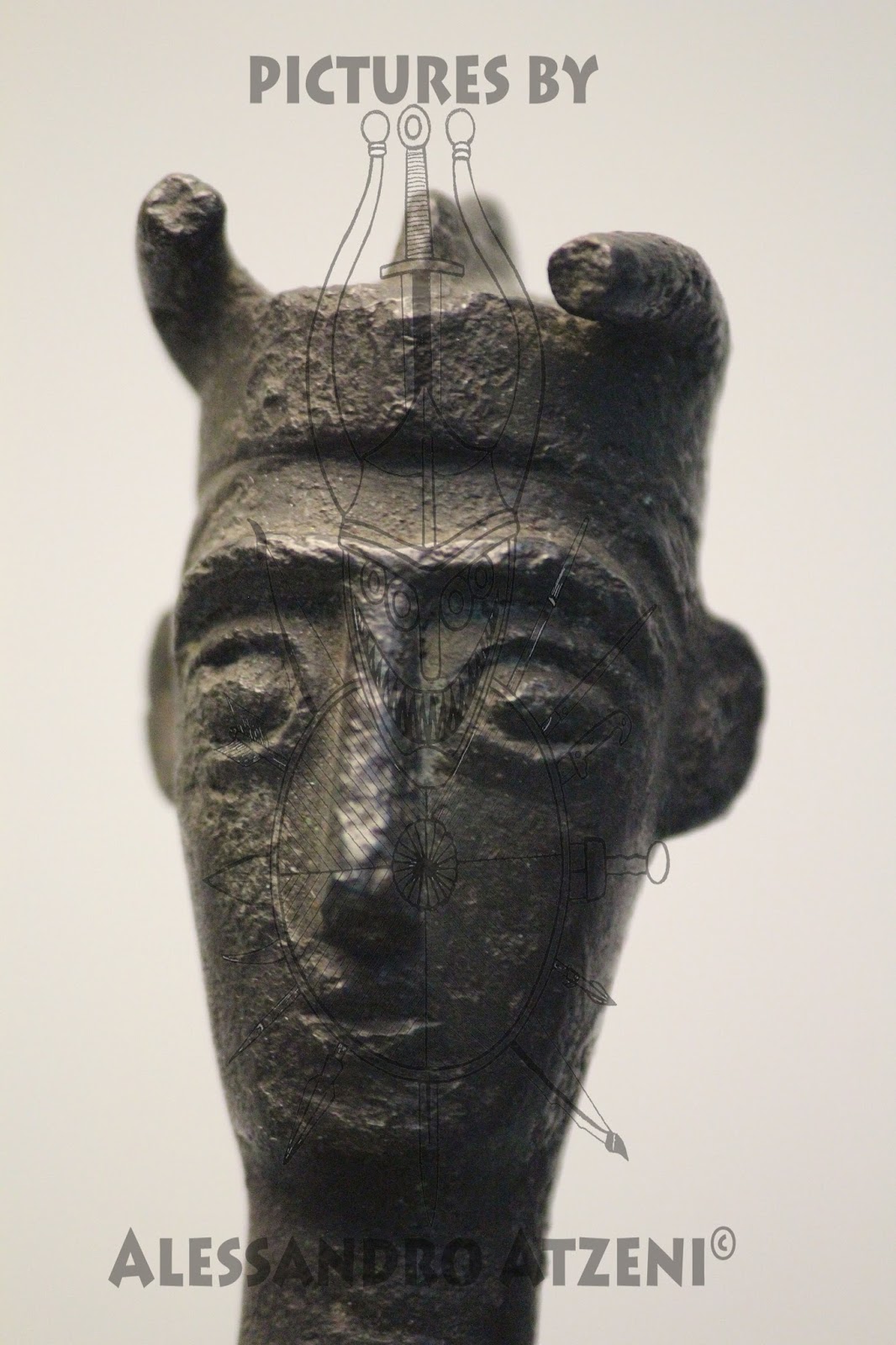
Una maschera Sherden nel British Museum di Londra

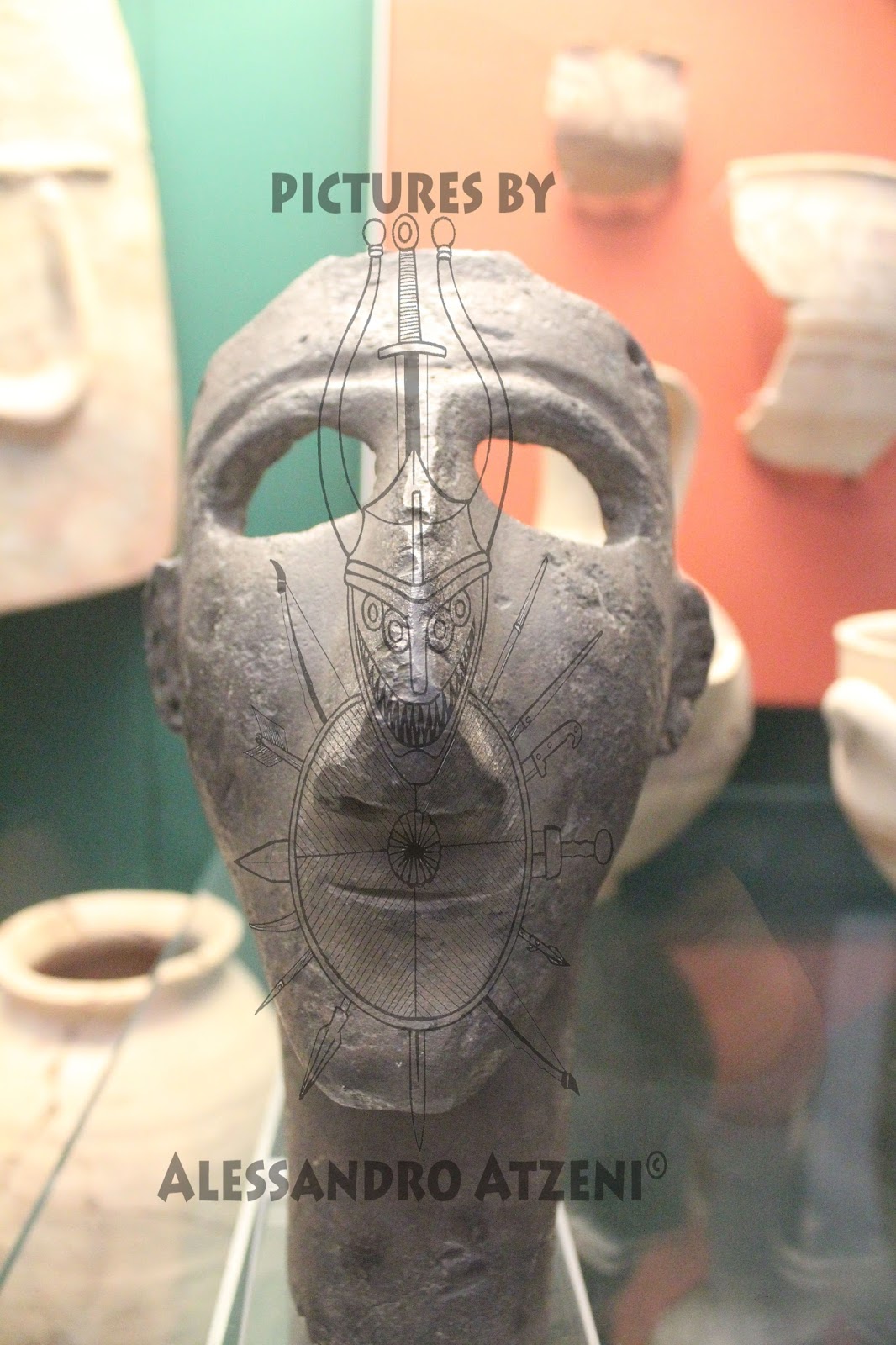
Finalmente, dopo essermi spostato in Inghilterra per approfondire i miei studi, sono finalmente andato a visitare il British Museum di Londra. Durante la mia "ricerca", all'interno del museo, dei famigerati bronzetti nuragici, sono incappato in questa maschera in bronzo. Avevo già visto alcune immagini dell'oggetto in vari libri, ma poterla osservare di persona è sicuramente un'esperienza sbalorditiva.

Maschera Sherden del British Museum. Sono visibili i fori per le corna.
Foto dell'autore. Qualsiasi riproduzione non autorizzata è perseguibile a norma di legge.
Riporto quanto scrive la dicitura:
"LBII-III (1400-1150 b.C.) Masks of this sort were also produced in pottery. They were possibly  used as insets for large statues made of wood. This example has two holes at the top on either side and it is possible that these held two horns, the resulting face rapresenting that of a Sherden Warrior".

Tradotto suona come:

" Tardo Bronzo II-III (1400-1150 a.C.) maschere di questo tipo venivano reaizzate anche in ceramica. Probabilmente venivano utilizzate per essere incluse in grandi statue in legno. Questo esempio presenta due fori nella parte superiore, su entrambi i lati, ed è possibile che vi fossero alloggiate due corna, il volto che ne risulta rappresenterebbe un guerriero Sherden "

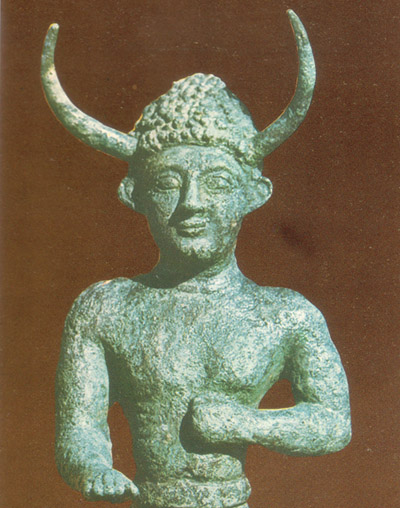
La cosa più stupefacente, per chi conosce un minimo di archeologia nuragica, è la somiglianza del volto della maschera con i famosi bronzetti nuragici. Il volto allungato con il mento appuntito, il sorriso appena accennato, il naso prominente e gli occhi arrotondati, tutti caratteri più tipicamente associabili a quelli delle statuine nuragiche, invece che a statue come quella del "Dio Cornuto" di Enkomi, spesso associata ai "Popoli del Mare" ed agli Sherden.

"Dio Cornuto" o "Apollo Cereates" (Late Bronze Age, 1200-1150) da Enkomi, Museo di Cipro, Nicosia, Cipro. Da http://www.cyprusexplorer.globalfolio.net/eng/history/letters_alasiya/index.php
Si paragoni il volto della maschera Sherden, ad esempio, con questo del bronzetto conservato a pochi metri di distanza, nello stesso British Museum, La somiglianza con lo stile Uta è impressionante, sopratutto se pensiamo che, come suggerisce la didascalia del museo, la maschera doveva essere dotata anche di due sottili corna di bronzo che si diramavano dalle tempie. Suggestione o realtà?
Notare che un simile accostamento con i bronzi nuragici è già stato fatto da Andrea Salimbeti nel suo sito web (The Greek Age of Bronze), ed in seguito pubblicato assieme a Raffaele D'Amato nel pregevole volume "Sea Peoples of the Bronze Age Mediterranean c. 1400 BC-1000 BC", 2015, Osprey Publishing, p.58.

Fotografia dell'autore, tutti i diritti riservati.
Che si tratti di un vera e propria "maschera nuragica" o se sia appartenuta, come si specifica, ai guerrieri Sherden dei Popoli del Mare, solo un'analisi degli isotopi del metallo che la compone potrà dirci la sua provenienza.

Alessandro Atzeni,
Oxford
20/04/2016.

lunedì 29 maggio 2017

Nuragic Warriors from prehistoric Sardinia: an osteological and experimental analysis


INTRO

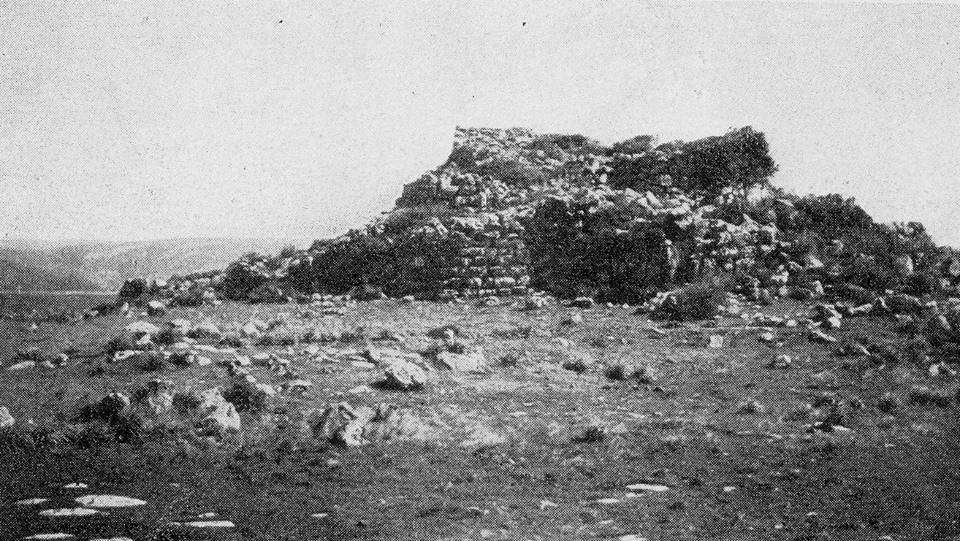
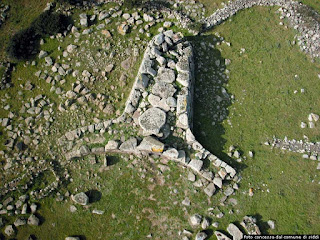
The Nuragic civilisation starts in Sardinia, Italy, in 1800 BC in the ancient bronze age, and ends around 500 b. C. with the Punic conquest of the island. The name of this culture came from the big stone structures called Nuraghi, typical stone towers of the Sardinia landscape (similar to the Scottish Brochs) believed to be built around 1600-1400 BC, and used by nuragics until the iron age, around 800-600 BC when they were reconverted as temple structures.


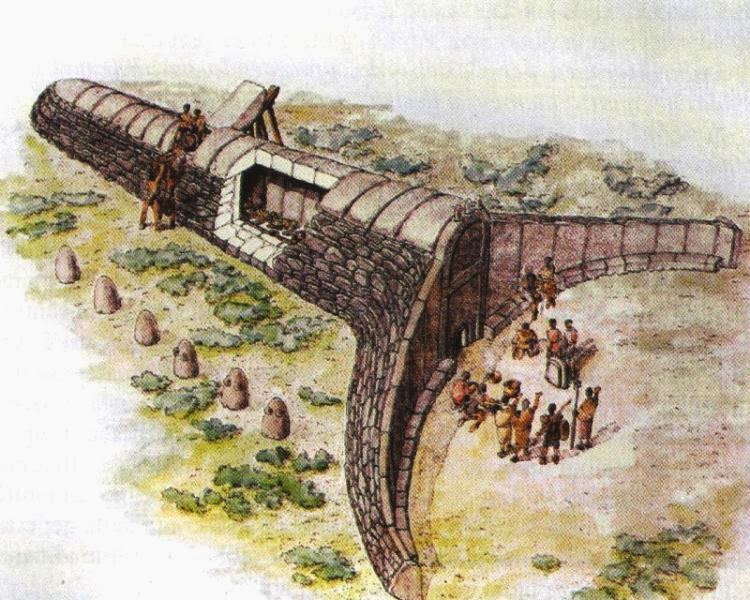
Other structures, typical of the nuragic culture, are the Giant's Tomb and the Sacred Wells. The first ones are much older, as they first appear in the very beginning of the nuragic culture. These tombs are collective burials, and they can be considered similar to the allee couvert, but with the addition of a pair of stone wings in the main entrance area, called "esedra", and with a particular large flat stone with a hole in the bottom, called  centering stele, for his particular "A" shape decoration, with meaning is unknown. These burials, evolutions of the alee, are presumed to have the shape of a bull's head seen from above. They are supposed to be the tombs of elites, but for a long time, they were presumed to be just collective burials. The use of this tombs ends around the 1200 BC, when the burial ritual changes and the grave begin to be simple, like the kind of Mont'e Prama, basically a hole in the ground covered with a flat rock or little stone.


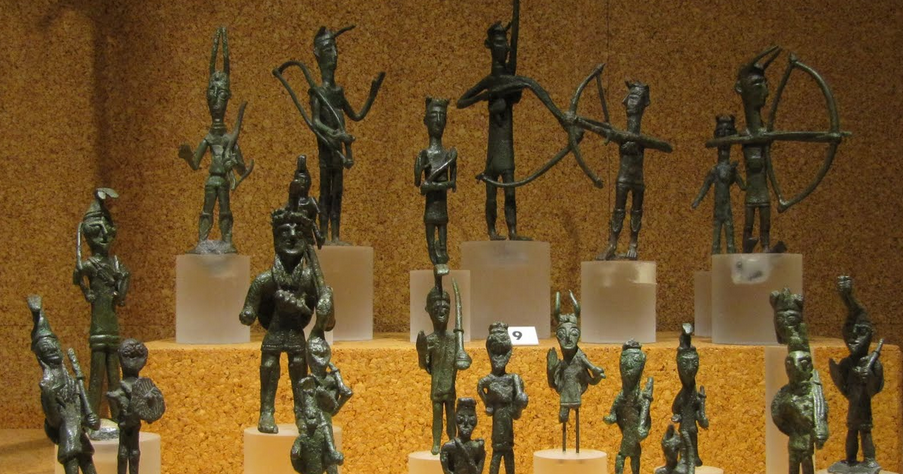
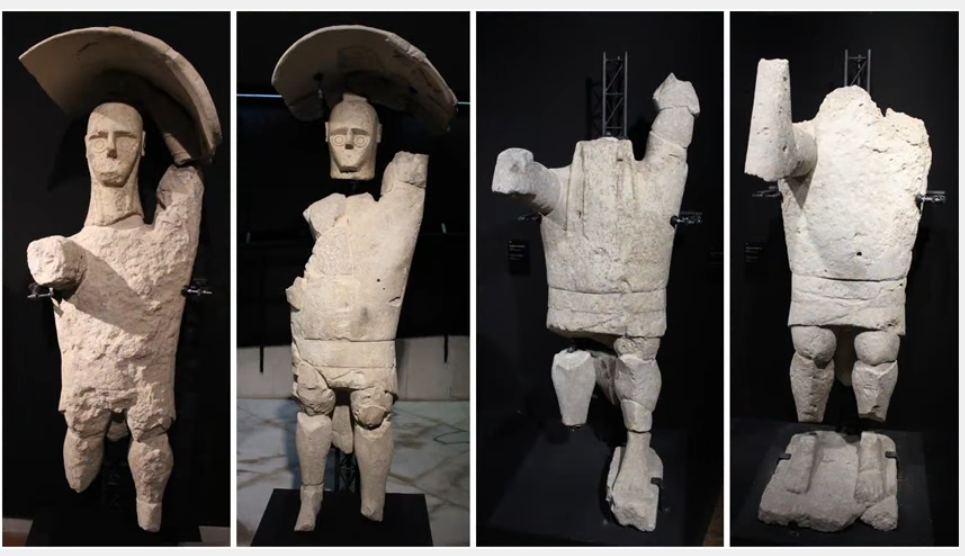
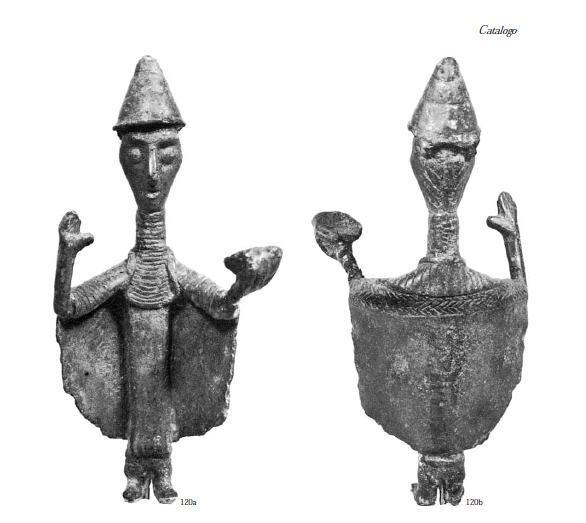
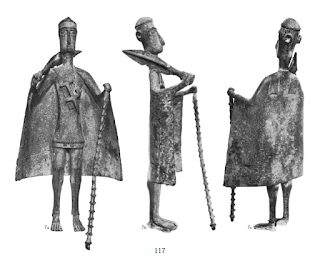
The sacred wells, instead, are typically used as sanctuaries, when the first appear in the middle and late Bronze age. They are presumed to be later than the nuraghi, and for sure they were used for rituals, offerings and meetings. In this temple, it was found the most part of the bronze statues of the chieftains and warriors, similar in the representation of the stone statues of Mont'é Prama, high nearly 2 meters, named by the place where they have been found, a little hill near the village of Cabras, in the Oristano city area. It's very interesting the debate around the dating of this statue. The Sardinian scholars are divided into those who date the statues around 1100-1000 BC and the ones dating the statue at 900-800 b. C. This stone statue represents mainly warriors, like the little bronze statues: different figures of shielded swordsman, archers, and hypothetical shielded boxers, but no chieftains. Of course one of the main questions regarding this figures are: what is their role? What sort of combat these warriors fought? Later on, I will talk you about the experimental studies I've done on this figures, especially about the boxers.
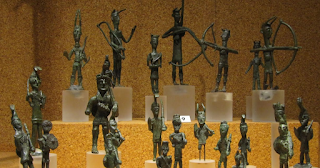


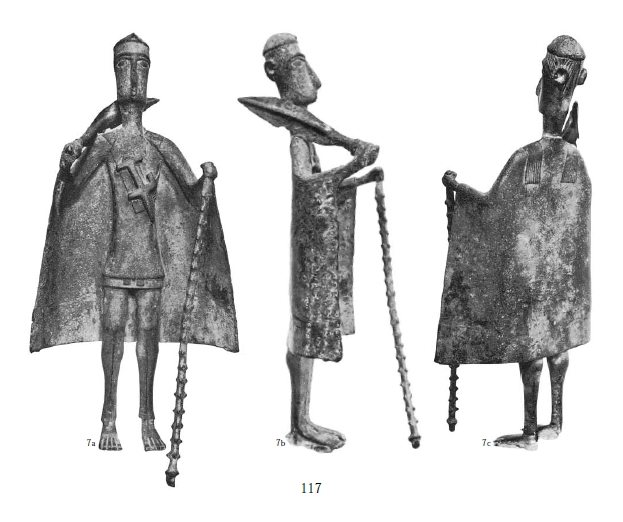
The nuragic culture in 100 years of studies was interpreted as a chiefdom, with the main leader, identified in the so-called “capo tribù” or tribe leader (now this identification is wrong, and seems more appropriate call this figures just “chief”), and his elite warriors, represented in the other examples. Priests and priestesses have been recognised in particular statues, especially the ones of females dressed in a long cloak and a sort of so-called “witch-hat”. This figures operating in the “sacred wells” and in the antis structures, water temples similar to the sacred wells, but without a vein of water from the ground. It's presumed that the water was directly brought into this places. The rest of the population has identified in so-called “praying bidders” both male and female. The general interpretation made by the scholars is that the bronzes represent the whole population:, warriors and chiefs, including young adults, mothers with children and commoners. Of course, because we have the iconography of warriors, one of the main questions of the scholars is if the nuragic were a warrior society or not. In my thesis, I've also approached this problem.


THESIS
My study started with my Bachelor degree thesis in osteology on three nuragic skulls with evidently healed weapon traumas. The purpose was of trying of reconstructing how the trauma was inflicted, trying to interpret the kind of weapon used and the motion of striking. All was finalised to try to understand how they fight and of course how much violent possibly was the nuragic culture. The whole anthropological study was based on three different aspects of my background: historical fencing, re-enactment & reconstruction and experimental archaeology. The archaeological support was given by the professor Anna Depalmas, and the osteological part by professors Rosalba and Giovanni Floris of Cagliari University.


The thesis is divided into different parts: in the first, I've approached the main question from an anthropological view. The documented cases of violence in the chimpanzees, and then a list of the first episodes of violence in the prehistory of humanity, from Jebel Sahaba in 12.000-10.000 BC to Talheim in Germany, in 5500-5000 BC (R. Brian Ferguson (2008)). Then I've looked in the osteological finds of prehistoric Sardinia, in the period before the nuragic, the so-called pre-nuragic period. We have different examples of bone and obsidian weapons used for injuring other members of the same species. From 10.000 BC to the ozieri culture in the Neolithic 3200-2800 BC, passing thru the beginning of the copper age in Sardinia, 2700-2500 BC, with the case of scab'è arriu, in wich we have a human jaw with a sherd of obsidian weapon, and the monte claro culture, with a skull, partially scalped. The pre-nuragic evidence of human traumas ends with the ancient bronze age, in sardinia associated to the bonnanaro culture. The remains are friendly called “sisaia” that means old grandmother in sardinian. The woman had different traumas and suffered from various illnesses. The subject has an evident healed trauma on the left shoulder and left arm, wich is supposed to be a parrying fracture. These two traumas are presumed to be contemporary. The woman also had transplantation of a bone wheel from his head. As one of the few cases in Europe, now is documented that the transplantation was made for healing purpose after a trauma as proved by O. Becheroni in 2013. In my thesis, I've also made a list of all the cases (at least ten) known in bibliography about skull trepanation in Sardinian prehistory. Some cases are also possibly documented for the bronze age, as the female one from Nurallao. This part was necessary as we have to distinguish possible ritual surgery from curettage made for healing purposes, as can be in one of the nuragic skulls studied.

And this is the main part of my thesis. We had three skulls from different parts of sardinia, of different times, from 800 BC for the supposed axe trauma from Alghero, to the 1200 BC for the one from Perdasdefogu.
The study covered different aspects. Starting from the wound we have presumed the weapon that could have made the same trauma, as for example, the first one from Alghero, was once presumed to be neolithic, made with a stone axe, but making a comparison with the sizes of the edges of neolithic sardinian stone axes, like the one kept in the anthropological museum, we have seen that the trauma was too narrow and precise. A result that could be obtained just with a metal weapon.
Same process for the skull from Perdasdefogu, the wound was long from the frontal to the occipital bone. For this reason is presumed to be a long blade, with great cutting power. In Sardinia at that time there are no other weapons that can do the same kind of damage. So we have presumed that the weapon could have been a Sardinian pistilliforme sword, similar to the British Limehouse, but with more accentuated curvatures in the final part of the blade. Moreover, we have determined, as for the previous skull, the angle which the aggressor have swung the weapon. Both were diagonal cuts, inflicted with the right arm, frontally for the sword, possibly both frontal or from the back for the axe. The last skull we have observed instead have a particular wound on the left side of the skull that was cured operating with surgical tools. The nature of the weapon used is unknown, but we have presumed that could have been a blunt force trauma. The weapon used couldn't have been a thrusting weapon, because it's so large that the man would have died. The interesting thing observed in all the three skulls is that all of them were healed and the people died at old age, presumed at least 40 years old.

The results obtained by this thesis were several. We have observed that at least two wounds were inflicted with weapons, a metal axe and possibly a sword and that two cases on three were of possible aggression, and at least one, the sword wound, could be a war or possibly a duel wound, for the nature of the weapon. During the study, we have used bronze weapons on fresh corpses of farming animals to replicate the cut-marks we were analysing, and for seeing if this kind of weapons were able to cut the bone.
The experimental cut-tests have show that these weapons are able to cut the flesh and even the bones, but they react differently based on the shape of the blade. Some like the pistiliforme/limehouse kind are definitively designed for slashing motions, cutting with the heaviest part of the blade, other ones, like the carp's tongue, are designed for more complex usage, using the narrow part of the blade for thrusting, and the middle for slashing, but probably with a push and pull action, as suggested by the particular handle, more appropriate for a delicate handling, instead that using the hammer fist grip. This is suggested also by some examples from Sardinia, a variation of the carp's tongue, with a ring protection for the index finger, like in the Italian renaissance swords. The handling in this way is more precise in the thrusting motion and allow more control also in the cuts because the index it's basically supporting part of the sword. The weapons had a hammered edge, and they were cast by the English swordsmith Neil Burridge. Some of them show bowing and use wear, that can be seen on the originals. The cutting tests were also interesting for seeing if the weapons could produce a similar wound to the one's object of study. The traumas were very close in the case of the axe and possible in the case of cutting with the pistilliforme/Limehouse sword.

Based on this work, we obtained interesting results with the experimental fightings we did for trying to understand how the wounds were procured. The reconstruction of the armours and the weapons led us to hypothesise that the main traumas on the body, should be observed mainly in the hands and in the thighs of the human remains of the nuragic period, in a similar way to what happened to the soldiers of Wisby, in the 14°th century AD.
Also, other evidence suggest that the motions for striking with specific swords, during the bronze age and the beginning of the iron age, were made in a particular way, different from the one used in the past with the swords from the medieval time on. This can be applied also in the way these warriors fought, mainly using the shield for parrying, and striking with the weapon, as probably was in classic and Hellenistic times, when the metallurgy of weapons could still not allow using iron or low carbon steel weapons to parry the blows, how was done from medieval times on with more performing kind of steel.

BOOK
With the work did in the past years before the thesis, I've then continued with the reconstructions and the experimentations on the nuragic warriors. The result was a book, called “gherreris” that means simply “warriors” in Sardinian language. The book is a further step, as in the thesis the space for doing such work of analysis on every single weapon and armour present in the statues was impossible. Each chapter is the depiction of a single piece of equipment, armour or weapon, observed in the iconography or in the archaeological remains. The previous hypothesis made in the past by other authors, as the existence of throwing sticks, boomerangs and war clubs were analysed and experimentally evaluated. For let you understand better what I've done I want to explain you a couple of very interesting cases of study I've examined in the book.

THE NURAGIC ARCHER'S BRASSARD
As the first example, I want to show you the experimental research made on the so-called nuragic “brassard”. As for bell-bearer's brassards, the archaeologist has presumed that the arm protections used by the nuragic archers were useful for protecting the inside part of the bow's arm from the hit of the string during the release of the arrow. But, there is a problem in the whole idea. The nuragic brassard doesn't protect the inside part, and usually is too much long, protecting even the outside of the elbow, also it protects the outside part of the hand and fingers, a detail that is very particular.
There is another problem. The nuragic archers used to carry on the back, the so-called “gruppo faretra” or “quiver-group”, a carrying system that included quiver with arrows, sword and some little containers of unknown function. This means that the nuragic archer was armed, and he used a sword for defending himself once the arrows were finished or an armed opponent was getting too close. Probably during the fight the nuragic archer extract the sword from his back with the right hand, the same used for manipulating the arrows to shoot. But the problem is that, usually, the nuragic swordsman are represented with a particular protection on the sword's arm. This protection typically is half the length of the arm, but sometimes is long enough to protect the elbow, but in all the examples it protects the outside part of the hand and the fingers. Exactly like the nuragic so-called brassard. The hypothesis proposed are: that the archer shifted the asset of his body, with the sword arm forward, but in this way, the sword's arm will be unprotected. The second idea is that the archer extracts the sword, throw away the bow and fighting with just the left arm, that is pretty difficult for many reasons. The other idea and this is my theory, the archer fought using the presumed brassard as a sort shield, combined with the bow for parrying the oncoming sword blows of the enemy. The right hand, used for handling the sword, kept backwards is potentially safe, used just in the proper moment, for striking with a trust or a cut. The nuragic brassard, in the end, looks more likely a protection for the oncoming sword hits, than for protecting the inside part of the arm by the bow's string or from another archer's arrows. In fact, the most protected archers depicted in the nuragic iconography don't have this brassard. Also, it's interesting to notice that they don't have any sword on the back.
Another interesting case is the one of

THE BOXERS OF MONT'E PRAMA
As I said previously, the nuragic statues show different warriors: shielded sword fighters, archers, and so-called “boxers”. These boxers have been compared to the Greek and Roman boxer of centuries later. The main difference, however, is the fact that these boxers used shields, or at least this is the opinion of most part of the scholars. The combatants are naked except for the V-shaped skirt around the waist. The left arm carries a shield, possibly leather, reinforced with thin, long pieces of wood and secured with a handle and a strap. The right arm wrapped inside a long brace protection, with round, spheric protection for the hand, and sometimes a band on the humerus. The glove seems to have, especially in the little bronze statues, some studs. The idea is that these fighters fought each other striking the opponent, that used the shield for protecting the body and the head of the damages procured by the stud. Trying to reconstructing this kind of combat, I've studied ancient boxing and reconstructed the panoply. The idea of the scholars on this combat was that the boxer could have done the punches like in a modern way. But as we know from other studies in unarmed ancient combat, the pankration and pygmachia had different strikes, especially the so-called hammer fist. So, trying to making a good reconstruction, I've analysed the perfect example of nuragic boxing glove that we have: the ones from the statues of Mont'e Prama.
In this gloves, we can observe that the stud is not all over the round part of the glove, but just under the pinkie. Furthermore, we see a transversal protection for the fist, located above the stud. Because so, obviously the gesture of the striking cannot be like in the modern boxing, but the only strikes that can be done must be hammer fist ones. This motion with the arm remembers the one used for striking with weapons, in fact, trying to making a reconstruction of this particular glove, I've realised that the final shape is more similar to a so-called nuragic “gamma-hilted dagger” than to a boxing glove. The reconstruction and the archaeological findings are very similar. In fact, analysing the stone statues the archaeologist have found traces of sculpted wounds carved in the stone, filled with red colour for simulating the human blood. The archaeologist that have excavated the statues have theorised that the boxers fought against armed opponents, in a kind of ritual combat. The necropolis it's an alignment of 33 graves containing young adults, of 16-18 years old, very fit and muscled, accustomed with long and extensive training, with muscular and bone deformation especially to the legs and the right arm. Also, the alimentation of this combatants was very specific, as the isotopic analysis show that they had a very specific diet based on fish and soft food. All the data seems to push to a necropolis of young elite warriors, that possibly fought in ritual combats, armed with shield and the iconic gamma-hilted dagger carried usually by chieftains and warriors of the nuragic society. To be fair from the osteological analysis on the bones of the necropolis of Monte Prama, the anthropologist has found more blunt force traumas than blade cut marks, and this is an aspect that needs to be explained.

In my honest opinion, I think that these warriors can be considered predecessors of the Etruscan and Roman bustuarii, sort of gladiators that used to fight to the death next to the bustus, the funeral pyre. We have similar descriptions also in the Iliad with the fights organised by Achilles for Patroclo's funeral.

THE NURAGIC SOCIETY
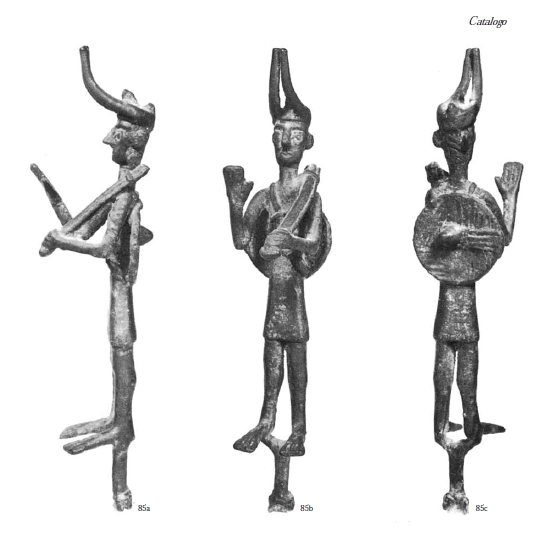
The final argument I want to talk it's about the possible identity of the figures presented in the iconography. As I said, in the beginning, the nuragic society it's interpreted mainly using the bronzes iconography. There is the chief, the soldiers that support him, the priests and priestess, the commoners and the bidders. But, what information we have obtained studying the weapons, the armour and the general equipment of the statues? Speaking about the weapons, we see in the bronzes that the figures carried particular weapons. This weapon, before interpreted as throwing sticks or boomerangs, now appear as particular swords, know as “votive swords”. These swords were used in the sacred wells and for offerings. Usually, the swords were broken and the parts used for creating gamma - hilted daggers. It's interesting that this daggers are represented on the chest of the chiefs, but also, if my hypothesis will be confirmed, in the glove of the so-called boxer.
These swords weren't used for war, as the composition of the bronze in basically pure copper as document the analysis executed by F. Lo Schiavo. The sword also, has the central rim misaligned, a detail that makes the sword very easy to bend. Also, most of this swords don't have a bronze handle, and they're almost impossible to use, if not just for thrusting, but also this motion it does not seem plausible. The other interesting detail is that very often the warriors use to carry more of this swords in the shield. The idea was that the warrior could use the extra swords for fighting, once that the main weapon was bent. But reconstructing the shields, we have seen that usually, the swords pass in the middle of the shield, where is the handle on it. This means that the warrior was using the hand for handling both shield and swords. There is no sheath behind the shield for carrying these swords. The other interesting thing is that the handles of this backup swords are identical to the main one used by the figure, and the handle is for sure the one of a votive sword. This is important, as for a long time has supposed that the backup swords were throwing swords, daggers or huge bronze pins. The other interesting fact regarding the weapons carried by the bronzes is the identity of the so-called “nuragic boomerang”. This idea is based on a particular bronze carrying a votive sword and a long curved stick. But looking closer to the handle of the item, we see a detail that can be seen also in other sticks of other bronzes. These sticks are the so-called “command stick” or sceptre, carried by the statues of chiefs. After having reconstructed the presumed boomerang and observed that with this particular shape and section the weapon just doesn't work properly, I presume that we are talking about the same item. This particular warrior then should be a chief in armour, with the objects of command: the votive sword and the sceptre. Notice that this warrior is practically identical to one of the couples called “the fellow soldiers”. In the representation, we see a horned warrior armed with a votive sword and the other one with a stick resting on his shoulder. Many authors have suggested a range of different weapons as a possible solution, but not even one seems certain. A closer look at the handle documents the particular shape of it. Of course, we have tried to make a reconstruction and the final shape, as we suggested before for the presumed boomerang, is very close to the sceptre 's handle. If this hypothesis is correct, this means that all the statues of presumed stick fighters with the same detail, instead are carrying the chief's sceptre. As you can see in the picture, the representation are very close between them. The other detail in common in all this representation is the stole kept on the figure's shoulder. The reconstruction shows that this piece of equipment is useless for defensive purposes, and that needs a belt or similar for letting the bearer moving around freely. But there is no evidence of this belt in the figures. It's like this stole was just supported on the shoulder, as a Roman toga, or a ceremonial ornament. But if you compare the bidders with the other statues, you can notice that they have in common also the gamma-hilted knife and the particular hat they wear. So the difference between this representations is just the cape used by the chiefs. In my opinion, a possible solution is that the stole carried by the bidders is the same cape, folded and left on the shoulder, with the sceptre reverse upside down. But, why this difference in the representations? We can just speculate about it.
In my opinion, the Nuragic statues, in general, represent the same figures. Not chiefs and warriors and commoners, instead chiefs, armed chiefs with complete panoply and offering chiefs.
This, of course, change radically the picture that we have of the nuragic society, and a deep revision will be necessary if this theory will be considered valid.
lunedì 3 settembre 2012

Scherma Medioevale e rievocazione storica


In questi anni ho avuto la fortuna di assistere in prima persona all’evoluzione della scherma medioevale nell’ambiente della rievocazione storica Sarda. Occorrerà anzitutto spiegare cosa si intende per tale disciplina. La scherma storica è quella particolare arte marziale che fa parte da tempo immemore della nostra cultura e delle nostre tradizioni. Quando si pensa alle “arti marziali” più un generale si immagina il Kung-Fu, lo Judo o il Karate, senza considerare che l’occidente ha una tradizione di combattimento a mani nude e “in armi” di diverse migliaia di anni. Purtroppo però a differenza dell’oriente, con l’avvento delle armi da fuoco, l’occidente ha rapidamente accantonato l’uso delle armi bianche, se non in modo limitato per la pratica sportiva e in misura nettamente minore per la difesa personale. La scherma medioevale si basa, ovviamente, sull’uso delle armi caratteristiche di tale periodo, ovvero la spada a due mani e la spada ad una mano, assai diverse dall’elegante sciabola o dal fioretto.

Da sin: Spada ad una mano "storta", falcione ad una mano e mezza,  falcione dritto ad una mano/una mano e mezza e spada ad una mano e mezza.
Tale disciplina viene applicata secondo due correnti di pensiero: chi la utilizza nei circuiti delle palestre delle A.M. (Arti Marziali) e chi la mette in pratica “sul campo” ovvero durante le manifestazioni di rievocazione storica. La compagnia di cui sono socio, la Memoriae Milites, pratica da diversi anni entrambe. La differenza fondamentale tra le due è che la prima non richiede l’uso di armature “storiche” ma predilige i materiali sintetici per proteggere il corpo e perfino per le stesse armi. La seconda essendo finalizzata a scopi didattici, impone l’uso di attrezzature quanto e più possibilmente filologiche. Ovvero cuoio e acciaio. Nettamente diversa è anche la preparazione atletica richiesta. Usare un armatura significa allenare il proprio fisico a sopportare un peso aggiuntivo di una trentina di chili, ridurre notevolmente la propria capacità di movimento e la stessa visibilità. Finanche la respirazione. Chiuso dentro una gabbia di imbottiture, cuoio e metallo, il combattente diventa come un motore con addosso una coperta. Il corpo si regola per aumentare la sudorazione e ridurre la temperatura corporea. L’aria inizia a mancare e la cassa toracica non può compiere i normali movimenti di espansione perché segregata dall’armatura pettorale. Sono condizioni che mettono alla prova il fisico e la mente, dando solo una vaga impressione di cosa poteva provare un cavaliere del tempo nell’avanzare in un terreno fangoso sotto il tiro costante degli arcieri nemici. Sembrerà superfluo puntualizzarlo, ma in Europa e specialmente nei paesi dell’est, questo tipo di rievocazione storica è motore trainante di diversi eventi, come il Grunwald o il ben più famoso Battle of the Natios, in cui i team di diverse nazioni si battono in duelli singoli e di gruppo per raggiungere il podio. In Sardegna purtroppo questo tipo di rievocazione stenta a decollare. Sono pochissimi i gruppi che si occupano di tale disciplina e se fossero in numero maggiore potrebbero tranquillamente pensare di poter allestire eventi di grande interesse turistico. Lo scontro tra diverse fazioni di combattenti renderebbe il tutto più dinamico ed ogni volta diverso,  avvincente quasi come una manifestazione sportiva.

Firenze, Giochi di Carnasciale 2012. L'arborense Fighting Team della Memoriae Milites al completo
(Foto By Gioacchino Sparrone).
La portata turistica di simili eventi è palese. La prova ne è il torneo che si sta organizzando in questi giorni per i “Giochi di Carnasciale”, a Firenze, dove la nostra associazione, la Memoriae Milites, è stata invitata a partecipare. Cinque duellanti andranno a difendere con la spada e lo scudo le buone posizioni ottenute nel primo Torneo “Ermete” svoltosi l’anno scorso a Fiesole, e terranno ben alto il nome del giudicato di Arborea e della Sardegna nell’ambiente della scherma storica a contatto pieno.

Alessandro Atzeni.

Torneo di Fiesole 2011. La M.M. assieme ai combattenti di altri gruppi invitati.

(Questo articolo è stato pubblicato sulla rivista bilingue "Lacanas". Anno X, numero 55, II 2012. Pag. 44, 45, 46, 47 )

giovedì 5 aprile 2012

Resoconto del Torneo Ermete di Firenze


Come riassumere l'esito di tre magnifiche giornate passate all'insegna della rievocazione storica, dello sport e dell'amicizia? Come trasmettere le emozioni provate, in poche, insufficienti, parole? Anzitutto mi preme ringraziare gli organizzatori dell'evento. Tra tutti spicca, per conoscenza diretta, Roberto Cinquegrana (In arte Roberto da Amalfi) e tutta la Compagnia dell'Aquila Bianca.
Gli altri ringraziamenti vanno a tutti i partecipanti al torneo, schermidori ben noti nell'ambiente, e ormai figure "epiche" del mondo della scherma in armatura.
And last, but not least, vanno ringraziate tutte quelle fantastiche persone che compongono l'associazione Memoriae Milites, una vera "famiglia allargata" in cui ognuno di noi si sente figlio, fratello, padre, madre o sorella. Un gruppo di scherma e rievocazione che va ben al di là della semplice passione e dell'interesse sportivo per la scherma e per la storia.

Il Torneo

Tralasciando le svariate vicissitudini che hanno rischiato di far saltare il viaggio (ringraziamo una nota compagnia aerea low-cost per questo) andiamo subito a parlare del torneo e della manifestazione.

Il tutto è iniziato sabato mattina, con la consueta preparazione pre-manifestazione.
La giornata ha iniziato ad ingranare verso metà mattinata, quando i contendenti, già vestiti e scalpitanti, si sono ritrovati nella lizza. Le quattro associazioni presenti hanno fatto scendere in campo i propri contendenti per il primo Girone. Memoriae Milites, Aquila Bianca, Gens Innominabilis, Custodes Ponti. Ognuno con il proprio saluto, ognuno con il proprio grido di battaglia, ognuno deciso a vincere il torneo.
Della nostra associazione sono scesi nel primo girone Luca Bernardini ed Emanuele Fadda.
Nel secondo girone invece hanno combattuto il presidente Antonello Fadda, Andrea Garau ed Alessandro Atzeni.
Di questi cinque si sono qualificati ai quarti di finale Emanuele Fadda, Andrea Garau ed Alessandro Atzeni.
Sono avvenuti anche un paio di duelli fratricidi, tra cui Andrea Vs Antonello durante il secondo girone della mattinata, ed Alessandro Vs Emanuele nel pomeriggio.

Dopo la pausa pranzo si è svolta la stupenda e coinvolgente giostra equestre diretta da Roberto e commentata da Mauro Guidolin, dopo di che sono ripresi i combattimenti.
Il sottoscritto purtroppo non è riuscito ad andare oltre il duello con il proprio capitano. Purtroppo o per fortuna, visto che alla fine, dopo un duello mozzafiato con Fonte (Gens Innominabilis), Emanuele Fadda è riuscito a conquistare il terzo posto.
Il vincitore del torneo invece si è riconfermato nuovamente essere Uther della Gens Innominabilis.
Sono seguite le premiazioni dopo un minuto di commosso silenzio in ricordo di Antonio Ermete, combattente dell'Aquila Bianca scomparso per via di un male incurabile.

Assolutamente toccanti le parole di Roberto al riguardo. Come auspicato, spero fortemente che l'esempio di questo eccezionale ragazzo venga preso da altri come modello di riferimento per i valori che, realmente, costituiscono la scherma e la rievocazione storica.

Unu saludu.
UMPARE!


sabato 18 febbraio 2012

Torneo di scherma storica in armatura "Ermete"


Con sommo piacere vi comunico la mia partecipazione al torneo di jousting (torneo a cavallo) e scherma medioevale a piedi "Ermete", organizzato dalla Compagnia dell'Aquila Bianca.

Il torneo si svolgerà dal 31 Marzo al primo Aprile presso le Cascine di Firenze.
Oltre alla giostra (torneo) a cavallo, vi sarà anche il torneo di combattimento a piedi e un torneo di tiro con l'arco.
Vi è un bellissimo parco in cui sono sicuro ci sarà l'occasione per mazzularsi per bene in una straordinaria battagliola.

La compagnia di cui son socio, la Memoriae Milites, parteciperà al torneo per il secondo anno consecutivo, con ben 5 torneatori in armatura completa, più svariati altri pedites per la battaglia.

La Sardegna sarà rappresentata dai nostri stemmi con sopra l'Albero Eradicato, e l'inequivocabile urlo di Héllis Héllis, Arborea!

Un saluto e arrivederci in quel di Firenze!
Salude!

lunedì 24 ottobre 2011

Intervista al sottoscritto sulla Memoriae Milites (Sardegna Quotidiano)

Rievocazioni. Tra soldati, armi e cavalieri. La storia sarda rivive in costume
Soldati romani che marciano sui campi isolani tenendo alte le proprie insegne. Guerrieri nuragici che ravvivano il fuoco davanti alla capanna del capo. Cavalieri di Arborea che lottano corpo a corpo per difendere il loro amato giudicato.

Per poterne indossare i panni non serve la macchina del tempo, né bisogna aspettare il casting di un colossal in salsa sarda. Basta avere tanta passione per la rievocazione storica. Come i componenti dell'associazione cagliaritana Memoriae Milites.


«Rievochiamo i più svariati periodi della nostra storia, tra didattica sul campo e pratica sperimentale» racconta Alessandro Atzeni, uno degli iscritti. «Curiamo gli aspetti artistici, culturali e sociali delle diverse realtà messe in scena».

Tra i periodi scelti, quello nuragico, romano e giudicale, con una particolare attenzione alle gesta della Cohors II Sardorum, «l'unità militare romana che in età imperiale reclutava in Sardegna i propri soldati».

La Cohors venne mandata in Mauretania alla fine del I secolo a.C., fondò il forte di Rapidum (Sour Djouab) e lì stette fino alla fine del II secolo, quando sotto Settimio Severo avanzò per fondare Altava (Hadjar Roum), dove rimase per buona parte del III secolo.

Signum della Cohors II Sardorum

«Noi illustriamo la sua storia e le capacità belliche - spiega Alessandro -. Riprendiamo l'armamento difensivo con gli scudi, gli elmi, le armature e quello offensivo con le lance, le spade e le armi d'assedio. Eseguiamo sia la 'mutatio' (sostituzione delle prime file con truppe più fresche), sia la 'testudo' (particolare disposizione difensiva) e gli spostamenti in formazione».


Esecuzione di una testudo con scudi ovali da auxilia
Memoriae Milites si occupa anche della parte 'civile' degli abiti e della vita delle donne al tempo. Inoltre, «visto che l'esercito romano includeva una serie di figure in grado di renderlo autonomo, abbiamo un fabbro storico, un ceramista, uno scultore e un tintore di tessuti».


L'ASSOCIAZIONE
L'associazione - anche attraverso lo studio e la pratica delle tecniche schermistìche - fa rivivere l'epopea der quattro giudicati, privilegiando quello d'Arborea per la tenace lotta contro l'invasore aragonese. II nostro logo riproduce l'albero deradicato e riporta il grido di battaglia delle armate arborensi: "Héllis héIlis Arbarè!", Memoriae Milites, puntualizza Alessandro, «è la prima e unica in Sardegna a praticare il "contatto pieno": i colpi portati in un combattimento non programmato vengono dati con estrema potenza.

Un simile stile richiede adeguate protezioni, come armature d'acciaio da due millimetri rette da cinghie di cuoio allacciate su un gambesson, una sorta di imbottitura somigliante a un giaccone. E per sostenere questo armamento serve allenamento».

Combattimento "a contatto pieno" tra due schermidori dell'associazione

Per il periodo nuragico (I ferro), Memoriae Milites è il gruppo di rievocazione più importante dell'Isola. Sono una trentina le manifestazioni a cui ha preso parte in due anni di attività: di cui una decina di ambito "Nuragico". Torneo del Liofante di Cagliari, Ad signa Milites di Sassari, Sa Batalla di Sanluri, Monumenti Aperti al nuraghe Diana di Quartu, La bastida di Sorres a Borutta, la Fiera del libro di Torino e altri ancora. L'analisi si focalizza su usi e costumi delle genti tra il IX e l'VIII secolo a.C. Si va dalla parte bellica a quella civile e religiosa, secondo le attuali interpretazioni archeologiche.

Guerrieri Nuragici della Memoriae Milites assieme all'autore Antonello Pellegrino, Fiera del libro di Torino, 2011.

«I periodi rievocati richiedono vestiti e oggetti adeguati. Alcuni si trovano da buoni rivenditori "storici". Ma la maggior parte vanno prodotti in casa».
Serve tanto tempo per documentarsi su ciò che si deve riprodurre la reperibilità dei materiali non è la stessa per ogni periodo. «È più facile trovarne per il periodo imperiale che per quello repubblicano» conferma l'Atzeni .

La rievocazione nuragica, sconosciuta fuori dall'Isola, richiede un'autoproduzione al 100%». Gli iscritti sono in tutto una quarantina, ognuno col suo carico di conoscenze e abilità.

«C'è chi sa costruire una macchina d'assedio romana - dice Alessandro - e chi sa confezionare vestiti o lavorare il legno. Siamo un gruppo molto eterogeneo, ma a cementarci è il grande amore per la storia sarda».

Fonte: Sardegna Quotidiano del 16/9/2011
Articolo di Roberto Mura

mercoledì 2 febbraio 2011

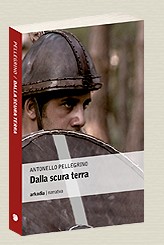
Quel volto nuragico su quel libro: recensione di "Dalla scura terra".


Sono nella sede della nostra associazione. Mi capita un libro fra le mani. In copertina un volto noto, quello del mio frade Luca Bernardini. Il romanzo è di un autore dal nome familiare. Quell'Antonello Pellegrino la cui penna avevo già apprezzato in BRONZO.
Noto subito che la grafica della copertina è cambiata, distaccandosi molto dallo stile del predecessore. Anche l'editore non è lo stesso. Arkadia editore. Che sia successo qualcosa alla condaghes edizioni?
Sfoglio velocemente il libro. Leggo la presentazione in quarta di copertina.

"Quella notte, dopo aver inutilmente cercato di infondere entusiasmo nei suoi, si alzò. Il cielo maledetto era coperto. Era così da giorni e raffiche di vento freddo di terra spazzavano la spiaggia sassosa sulla quale avevano ormeggiato la nave.
Sopra la testa di Olai torreggiava alta la protome di toro dalle lunghe corna. Nel buio, tra lame di gelo che filtravano nel mantello di ruvida lana nera, il guerriero la fissava muto.
Aveva mille pensieri, ma poche parole per esprimerli, rimase così in silenzio. Pregò il grande padre, ma le invocazioni silenziose che meditava parevano non bastare; estrasse allora il pugnale dorato che portava sul petto e, lentamente, si incise il palmo della mano sinistra. Lo strinse fino a far gocciolare il sangue, quindi battè forte il palmo sull'asse che sosteneva la polena.
Sollevò lo sguardo; tra le nuvole, lontano ad occidente, un lampo silenzioso illuminò il contorno del simulacro del Dio.
Olai decise che era un buon segno e cercò di spingere a forza serenità nel suo cuore mentre rientrava al campo."

Interessante. Con quello stile agile e piacevole che caratterizzava anche il volume precedente.

Qualche settimana dopo mi ritrovo il libro tra le mani, pronto ad essere divorato.
Leggo con piacere quelle 315 pagine di ottima narrativa Sarda. Un misto tra romanzo storico e thriller alla Dan Brown, con tanto di assassino dai capelli biondissimi, armato di affilati sigilli di morte e tanta, meticolosa, follia.

Leggiamo la presentazione sul sito dell'editore:

"Irlanda, in un prossimo futuro. Alcuni ricercatori si concentrano su un ritrovamento archeologico molto inusuale. Due corpi avvinghiati nella morte, sprofondati nella torba. Che segreto nasconde il loro decesso? Perché qualcuno si interessa così da vicino ed in modo estremamente pericoloso agli studi che la dottoressa O’Connor effettua sulle mummie? Ai suoi occhi si apre un mondo affascinante, sconosciuto, che un giovane archeologo sardo, volato fino a Dublino, cerca di decifrare, anche con l’aiuto della collega irlandese.
Scopriranno a loro spese che il passato, a volte, non è solo materia per bonari studiosi. Scopriranno le tracce di Olai e dei suoi guerrieri Sherdna, venuti dal mare in cerca dello stagno, per forgiare le loro temibili armi, ed approdati laddove una popolazione locale, guidata da una affascinante sacerdotessa della Grande Madre, cerca di difendersi dai terribili demoni Fomor, un branco di esseri il cui unico scopo è quello di distruggere, saccheggiare, depredare. Un filo doppio lega i destini di Thelma O’Connor, Gianni Mele e del nuragico Olai, un rapporto che affonda negli angoli bui della storia, in un passato dimenticato, fatto di eroi e di uomini coraggiosi. Un passato però che rischia di essere esiziale per i due scienziati, braccati da chi non ha nessun interesse che le loro scoperte siano portate all’attenzione del pubblico."

Sicuramente intrigante. Anche se leggermente ingannevole.
Perchè nel libro la vera protagonista è lei, la dottoressa O' Connor, non quel Gianni Mele, che il lettore aveva già conosciuto nel precedente racconto.
Non che il cambiamento di prospettiva sia così traumatico. Il romanzo rimane godibilissimo e di ottima qualità.
La seconda parte evidenziata in neretto invece è (almeno a mio parere) decisamente imprecisa. Chi leggerà il romanzo (o chi l'ha già letto) vedrà se è il caso di dissentire o meno.
Per quanto riguarda l'ambientazione il romanzo subisce una svolta improvvisa. Le lande che nel precedente volume avevamo visto incredibilmente lontane, in dalla scura terra diventano lo scenario in cui si svolge la maggior parte dell'azione.
Intrigante, almeno per il sottoscritto (che è sempre stato un appassionato di miti Celtici ed Irlandesi) la riproposizione delle guerre tra Tùatha Dé Danann e i Fomor sotto il profilo "storico". Pellegrino affronta di petto un dilemma archeologico che rimane un incognita tutt'oggi per diversi studiosi.
Da dove proveniva lo stagno che serviva agli antichi Nuragici per produrre i numerosissimi manufatti di bronzo che venivano utilizzati nella guerra e nella vita civile, e che oggi riempiono le ricche vetrine dei vari musei sardi?
Con quel potentissimo mezzo che è il romanzo storico, Pellegrino ci fa viaggiare con la nave dei nostri guerrieri Sherdna verso le mitologiche isole Cassiteridi (raggiunte oltretutto dai Fenici e note anche ai Greci secoli dopo). Lungo quei percorsi che sono stati solo ipotizzati dagli studiosi "ufficiali", sempre senza troppa convinzione.
Eppure il fatto è incontestabile ( e su questo si basa la trama di entrambi i libri) ovvero che in Sardegna c'è tantissimo bronzo nei rinvenimenti archeologici, discrete quantità di rame nel sottosuolo minerario, ma praticamente niente, o pochissimo Stagno (non mi si dica che nei monti di Villacidro c'è abbastanza cassiterite da rifornire la produzione metallurgica di tutta la Sardegna, vi prego!).
Qual'è la soluzione?
Forse i nuragici rimanevano sulle loro torri, con lo sguardo verso l'orizzonte, in attesa che degli improbabili mercanti portassero loro il prezioso metallo?
Oppure salpavano, con le loro agili navi dalle protomi stilizzate, verso le terre del nord, per prendere con le loro stesse mani quel metallo bianco di cui avevano assoluto bisogno?

Una domanda cui solo la ricerca archeologica potrà mai dare una risposta.
Per ora limitiamoci a salpare sulla la nave della fantasia, con questo vento di speranza che Antonello Pellegrino ci ha regalato.


sabato 5 giugno 2010

Soddisfazioni

Sardinian Warrior -
Talk about exotic and eclectic! Sardinian Warrior is the creation of Alessandro Lessa. You’ll need to switch on your Italian translator – especially if you want to wander off and explore his other blogs and links. The first settlers on Sardinia were the enigmatic Nurag people of the Bronze Age, famous for their beehive live structures that are very like tholos tombs. Not much is known about the Nuraghi except that they did achieve a level of sophistication that included sea trade. Both the Nurag people and the short lived Greek colonies on Sardinia's coast were annexed by Carthage in 537 BC. Lessa is putting together his hoplite kit as we speak but a visit to his blog will take you on a journey through the byways of Sardinia’s extraordinary history.

Cosa mai vorrà dire la lunga descrizione presentata qua sopra, affianco al nostro caro bronzetto "nuragico"?
Beh, traducendo alla buona significa più o meno:

"Parliamo invece dell'esotico e dell'eclettico! SardinianWarrior è una creazione di Alessandro Lessa.
Avrete bisogno di passare ad un traduttore in italiano- sopratutto se volete leggere i suoi numerosi blog ed esplorare i vari links.
I primi abitanti della Sardegna furono i Nuragici (unica pecca... Peter! -l'autore dell'articoletto-, in realtà non è proprio così ma non fa nulla ; ) ) durante l'età del bronzo, famosi per le loro costruzioni simili ad alveari, molto somiglianti alle Tholos Micenee.
Non si sa molto sui Nuragici, se non per il fatto che riuscirono a raggiungere un elevato grado di sofisticazione che includeva il commercio marittimo.
Sia le popolazioni "nuragiche" che le giovanissime -e dalla breve vita- colonie Greche (Olbia?) furono annesse ai territori Cartaginesi dal 537 avanti Cristo.
Lessa ha riferito di aver iniziato a mettere insieme il suo armamento per tale periodo.
Una visita al suo blog vi porterà attraverso le strade dalla straordinaria storia della Sardegna."

Che dire! Tradotto forse non gli rende onore...ma leggendolo l'espressione che mi si è stampata in viso è stata quantomeno esagerata! Al confronto il sorriso a mezzaluna del gatto con gli stivali sarebbe sembrato un broncio!
è questo il motivo per cui ho fatto questo blog, è questo il motivo che gli dedico il mio tempo, è per persone straordinarie e curiose di sapere come Peter (che si è documentato in una maniera incredibile ed accurata), distanti centinaia di chilometri, che ho creato tutto questo!
Per far conoscere la Sardegna e la sua straordinaria storia al resto del mondo!

Ora e sempre...
Fortza Paris!

sabato 29 maggio 2010

Far conoscere la Sardegna non solo per le spiagge...


Questo è il breve trafiletto cui era dedicata metà pagina nella guida ai gruppi partecipanti al natale di roma (2010) appena trascorso.
Chiaramente, anche la Memoriae Milites ha avuto quello che gli spettava.
Come si può ben leggere "si occupa da circa 5 anni di rievocazione storica e di archeologia ricostruttiva ed attraverso queste metodologie cerca di divulgare tra il pubblico la storia passata della propria terra che è la SARDEGNA.
Attualmente i periodi rappresentati sono quello NURAGICO (IX - VIII secolo a.C. ),
quello romano imperiale con COHORS II SARDORUM, reparto ausiliario dell'esercito romano costituito da SARDI ed infine il periodo medioevale con particolare riferimento al giudicato di ARBOREA."

Perchè la Sardegna, sarebbe giusto ricordarlo più spesso, non è solo spiagge bellissime e mare cristallino... è anche una terra millenaria con una storia intensa ed affascinante, in cui si sono succeduti uomini costruttori di incredibili torri alte decine di metri, sino a lungimiranti "Giudici", di cui una in particolare scriverà un codice di leggi (la Carta de Logu) tale da superare in quanto modernità di concetti, perfino la MAGNA CARTA.

La Sardegna è questo...e molto altro...